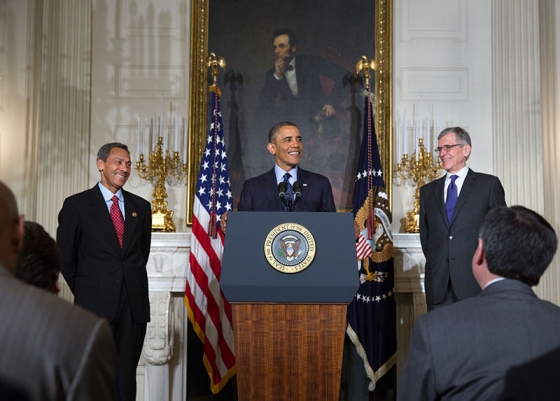
With congressional Republicans accusing the White House of improperly influencing the Federal Communications Commission’s net neutrality decision, FCC Chairman Tom Wheeler is appearing before a House committee this morning to defend the process.
In his prepared remarks, Wheeler said, “There were no secret instructions from the White House. I did not, as CEO of an independent agency, feel obligated to follow the President’s recommendation. But I did feel obligated to treat it with respect just as I have with the input I received—both pro and con—from 140 Senators and Representatives. Most significantly of all, we heard from nearly four million Americans, who overwhelmingly spoke in favor of preserving a free and open Internet.”
The FCC last month voted to reclassify broadband providers as common carriers and impose net neutrality restrictions that prevent them from blocking or throttling Internet content or prioritizing content in exchange for payment. Today’s hearing is in front of the Committee on Oversight & Government Reform. Committee Chairman Jason Chaffetz (R-UT) accused the White House of improperly influencing the FCC’s decision-making process and demanded copies of all communications between the FCC and White House.
Wheeler explained that the FCC followed the process that Congress mandated:
The roadmap we followed to develop this order was a process that Congress established close to 70 years ago in the Administrative Procedure Act. We made a public proposal, we invited interested parties to comment on our proposal—which they did in record numbers—and then we adopted a final rule based on this record. The final result of this year-long process is rules that protect and preserve the open Internet, while promoting continued investment in broadband networks.
Obama made his position known on November 10 last year when he urged the FCC to reclassify broadband, subjecting Internet service providers to some of the same “Title II” rules that apply to telephone providers. Wheeler said the president’s public statement had an impact. “The push for Title II had been hard and continuous from Democratic members of Congress. The president’s weighing in to support their position gave the whole Title II issue new prominence,” Wheeler said.


 Loading comments...