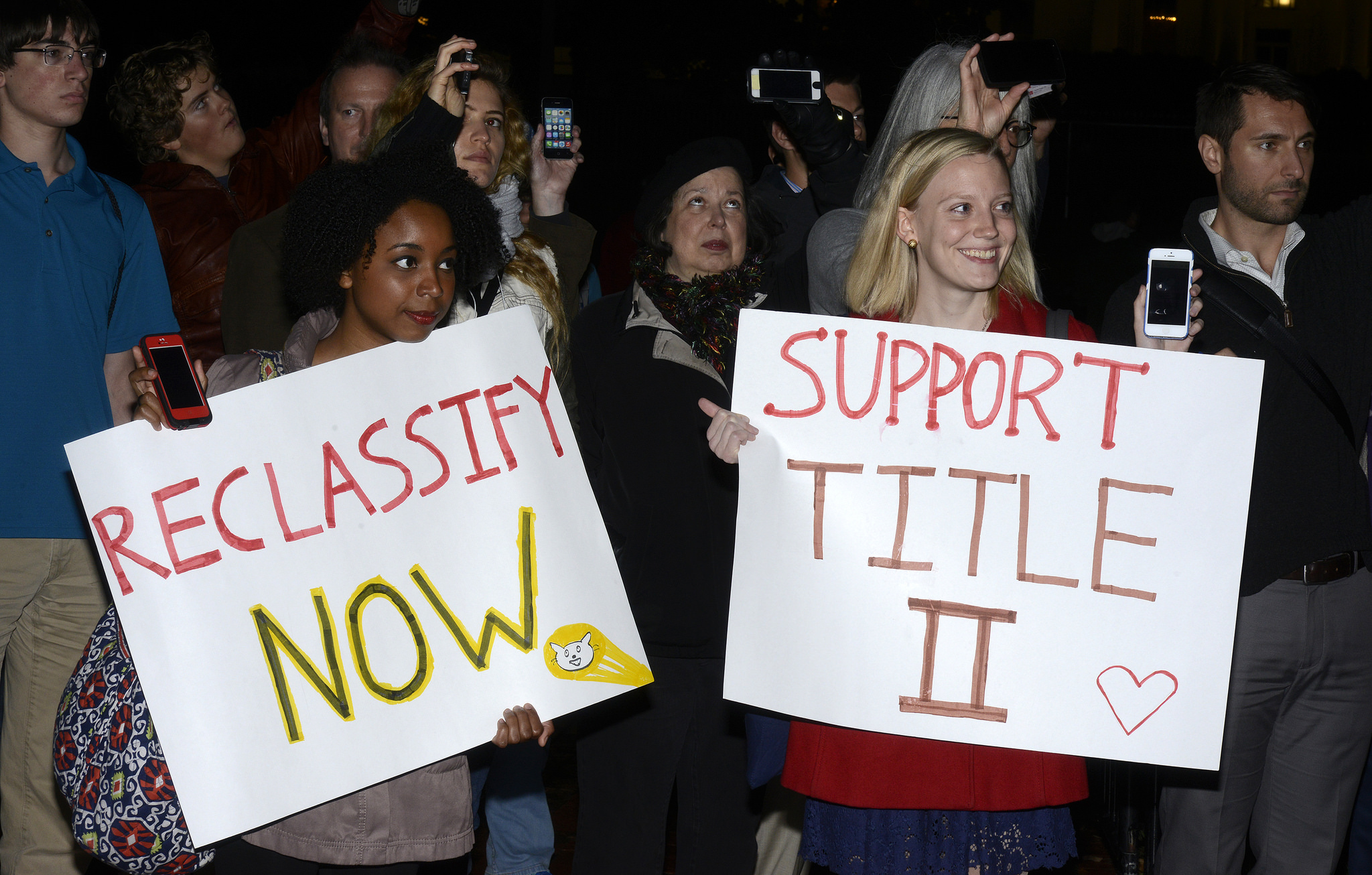
The Federal Communications Commission today voted to enforce net neutrality rules that prevent Internet providers—including cellular carriers—from blocking or throttling traffic or giving priority to Web services in exchange for payment.
“This is no more a plan to regulate the Internet than the First Amendment is a plan to regulate free speech.”
The most controversial part of the FCC’s decision reclassifies fixed and mobile broadband as a telecommunications service, with providers to be regulated as common carriers under Title II of the Communications Act. This decision brings Internet service under the same type of regulatory regime faced by wireline telephone service and mobile voice, though the FCC is forbearing from stricter utility-style rules that it could also apply under Title II.
The decision comes after a year of intense public interest, with the FCC receiving four million public comments from companies, trade associations, advocacy groups, and individuals. President Obama weighed in as well, asking the FCC to adopt the rules using Title II as the legal underpinning. The vote was 3-2, with Democrats voting in favor and Republicans against.
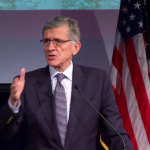
Chairman Tom Wheeler said that broadband providers have the technical ability and financial incentive to impose restrictions on the Internet. Wheeler said further:
The Internet is the most powerful and pervasive platform on the planet. It is simply too important to be left without rules and without a referee on the field. Think about it. The Internet has replaced the functions of the telephone and the post office. The Internet has redefined commerce, and as the outpouring from four million Americans has demonstrated, the Internet is the ultimate vehicle for free expression. The Internet is simply too important to allow broadband providers to be the ones making the rules.
This proposal has been described by one opponent as “a secret plan to regulate the Internet.” Nonsense. This is no more a plan to regulate the Internet than the First Amendment is a plan to regulate free speech. They both stand for the same concepts: openness, expression, and an absence of gate keepers telling people what they can do, where they can go, and what they can think.
Wheeler also said putting rules in place will give network operators the certainty they need to keep investing.


 Loading comments...