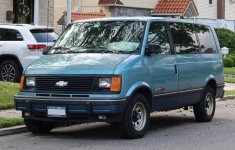
Moon-bound astronauts rehearse their launch-day activities with a repurposed ride.
See full article...
See full article...
Six months later, Canoo filed for bankruptcy, and NASA ceased active use of the electric vans, citing a lack of support for its mission requirements.

They aren't used, how many parts do you need to change between uses.I wonder just how functional the Canoos are. They may only be photo op ready.
As for “getting support from any car mechanic”, there isn’t exactly a parts supply chain for what are basically hand built prototypes.
But did the Canoos ever work? Or are they just shells, placeholders for the real ones that will never be delivered. That’s a lot more plausible than this company delivering three fully functioning vehicles to NASA and nobody else. Not even a functioning prototype for journalists to test drive.They aren't used, how many parts do you need to change between uses.
Hell, they have 3 of them, cannibalize one to keep the other 2 working if you need that many parts to keep them going.
I want to know, why NASA paid Boeing to use the Astrovan when they had vehicles built and paid for that service already. And I want a good response, taking into account that the vans that they own are new and unused.
The article says that they stopped using them after the company filled for bankruptcy. If they were paid for, and they never worked, then they need to fire some people at NASA.But did the Canoos ever work? Or are they just shells, placeholders for the real ones that will never be delivered. That’s a lot more plausible than this company delivering three fully functioning vehicles to NASA and nobody else. Not even a functioning prototype for journalists to test drive.
It's a freaking car that gets used once every other year, how much support do you need from the makers of the vehicle that you can't get from any car mechanic?
I wonder just how functional the Canoos are. They may only be photo op ready.
As for “getting support from any car mechanic”, there isn’t exactly a parts supply chain for what are basically hand built prototypes.
Way back when the Astrovan II was unveiled for the first time, my thought was "lot of hype about that, hope they are giving that much attention to the spacecraft."That's a lot of words to note that NASA managed to frantically procure a vinyl wrap for an old RV that it had on hand, because the vehicle we couldn't maintain was unavailable to bring the astronauts to the rocket we can't build.
This article feels like a metaphor for something...
Six months later, Canoo filed for bankruptcy, and NASA ceased active use of the electric vans

Most car mechanics are not set up to handleIt's a freaking car that gets used once every other year, how much support do you need from the makers of the vehicle that you can't get from any car mechanic?
I very much doubt those are purely stock cars. You can bet that Tesla almost certainly had to customize something about the interiors. That or they designed their spacesuits around the interior of a Tesla.Gov bureaucrats are actually really good at picking losers. Someone should start an index fund where you bet against every company that gets a gov handout.
Now here's a question- why are dedicated vehicles needed for this at all? SpaceX has shown that astronauts can fit inside what appear to be stock Tesla cars. So why doesn't NASA just use a stock car? They could even sell it off after the mission to a collector and maybe make a few bucks.
To be fair, the 8-hour endurance probably isn't all that hard for most long range EV battery packs. But you need it so someone doesn't try to put in something with a minimal battery pack which could easily handle the distance they're driving. So the primary requirement is that hold time.Most car mechanics are not set up to handleFerengi Rules of AcquistionFederal Acquisition Regulations. The requirements prevented use of something off the shelf. Some of the requirements make sense: a door wide enough for people wearing space suits. Power supplies for the suits. Air conditioning appropriate for Florida. 8 hour endurance (Time SLS can delay launch before a scrub?).
NASA wanted a single electric vehicle able to hold all the crew, support staff and equipment. Dividing the problem into two or four might have helped. There was some reason given in the requirements for going electric. Electric + 8 hours endurance sounds difficult for off the shelf equipment. If they really couldn't budge on that it would put the vehicle into FAR territory with all the resulting horrors.
I saw an actual Canoo prototype driving in Los Angeles with manufacturer plates. Which doesn't mean much (I saw an Aptera prototype in LA traffic when my kids were in preschool and they are in college now), but Canoo had at least one working car, so I imagine they could deliver three.But did the Canoos ever work? Or are they just shells, placeholders for the real ones that will never be delivered. That’s a lot more plausible than this company delivering three fully functioning vehicles to NASA and nobody else. Not even a functioning prototype for journalists to test drive.
Tesla? Not sure why you're mentioning them in regards to the Canoo debacle/fraud.I very much doubt those are purely stock cars. You can bet that Tesla almost certainly had to customize something about the interiors. That or they designed their spacesuits around the interior of a Tesla.
Because someone else asked why a custom vehicle was needed when SpaceX use what appear to be stock Teslas for their human flights.Tesla? Not sure why you're mentioning them in regards to the Canoo debacle/fraud.
They don't appear heavily customized. There is a handhold in the middle in place of an arm rest, and they put the middle seat to the back position.I very much doubt those are purely stock cars. You can bet that Tesla almost certainly had to customize something about the interiors. That or they designed their spacesuits around the interior of a Tesla.
I wasn't bringing up Tesla vehicles. I was responding to a post that brought up the vehicles SpaceX bought for the purpose for comparison. Which is that the Tesla's probably also probably had customizations on the interior even if they look stock on the outside.Tesla? Not sure why you're mentioning them in regards to the Canoo debacle/fraud.
They don't appear heavily customized. There is a handhold in the middle in place of an arm rest, and they put the middle seat to the back position.
View: https://www.youtube.com/watch?v=2-hE2qXNEng
Almost certainly buying and altering the Model Y's would be far more expensive. I would guess the vinyl wrap probably was the most expensive part of it.I dread to think how much NASA would be paying Boeing for that lease vs just buying a couple of Model Y or something.
I think there are requirements that a stock Model Y couldn’t meet. But SpaceX could probably fix up a couple like the ones they use.I dread to think how much NASA would be paying Boeing for that lease vs just buying a couple of Model Y or something.
Yes, but why would that be better for NASA than simply paying Boeing or SpaceX a small sum of money to use the ones they already have? Especially given these are at best going to get used once a year.I think there are requirements that a stock Model Y couldn’t meet. But SpaceX could probably fix up a couple like the ones they use.
Most car mechanics are not set up to handleFerengi Rules of AcquistionFederal Acquisition Regulations. The requirements prevented use of something off the shelf. Some of the requirements make sense: a door wide enough for people wearing space suits. Power supplies for the suits. Air conditioning appropriate for Florida. 8 hour endurance (Time SLS can delay launch before a scrub?).
NASA wanted a single electric vehicle able to hold all the crew, support staff and equipment. Dividing the problem into two or four might have helped. There was some reason given in the requirements for going electric. Electric + 8 hours endurance sounds difficult for off the shelf equipment. If they really couldn't budge on that it would put the vehicle into FAR territory with all the resulting horrors.

Not to be TOO dark, but "foreboding" seems to be the watchword.That's a lot of words to note that NASA managed to frantically procure a vinyl wrap for an old RV that it had on hand, because the vehicle we couldn't maintain was unavailable to bring the astronauts to the rocket we can't build.
This article feels like a metaphor for something...
In 2009, your beloved SpaceX was literally days away from going bankrupt and the only reason it is here today is because “gov bureaucrats” picked it for the NASA commercial cargo contract.Gov bureaucrats are actually really good at picking losers. Someone should start an index fund where you bet against every company that gets a gov handout.
Now here's a question- why are dedicated vehicles needed for this at all? SpaceX has shown that astronauts can fit inside what appear to be stock Tesla cars. So why doesn't NASA just use a stock car? They could even sell it off after the mission to a collector and maybe make a few bucks.
They were in that position because of the NASA contract. NASA was only footing half of the F9/D1 development cost, Musk didn't have enough to cover the other half himself, and he nearly ran out of runway before he could secure outside support. SpaceX being allowed to bid on COTS at all was because the courts overrode the original sole-source contract to Kistler.In 2009, your beloved SpaceX was literally days away from going bankrupt and the only reason it is here today is because “gov bureaucrats” picked it for the NASA commercial cargo contract.
SpaceX at that point had only launched the Falcon 1 and were working on the Falcon 9. I’m sure you would have been in the chorus of people accusing NASA of picking losers.
The “Gov bureaucrats” that you deride as being good at picking losers also picked Boeing and a then unproven SpaceX to replace the space shuttle and return space flight for US soil. They did this despite immense pressure from Boeing lobbyists to be the only selected company and get all the money available to the commercial crew program
When it comes to ISS supply contracts, we've got:In 2009, your beloved SpaceX was literally days away from going bankrupt and the only reason it is here today is because “gov bureaucrats” picked it for the NASA commercial cargo contract.
SpaceX at that point had only launched the Falcon 1 and were working on the Falcon 9. I’m sure you would have been in the chorus of people accusing NASA of picking losers.
The “Gov bureaucrats” that you deride as being good at picking losers also picked Boeing and a then unproven SpaceX to replace the space shuttle and return space flight for US soil. They did this despite immense pressure from Boeing lobbyists to be the only selected company and get all the money available to the commercial crew program
Well said. Not to mention that part of the reason there was so little investment in commercial space through the 80s and 90s was because gov was giving sweetheart contracts to old space contractors like Lockheed and Boeing, eventually ULA. ULA was getting a huge gov payout each year just to exist, even if they didn't launch anything at all, via a standby fee. When people say "see, see, SpaceX needed gov money to get going" well sure, they needed gov money because the incumbents were getting gov money and that's how the whole industry was structured at the time. If nobody was getting gov handouts it would have been a hell of a lot easier to raise private capital.They were in that position because of the NASA contract. NASA was only footing half of the F9/D1 development cost, Musk didn't have enough to cover the other half himself, and he nearly ran out of runway before he could secure outside support. SpaceX being allowed to bid on COTS at all was because the courts overrode the original sole-source contract to Kistler.
Falcon 1 was originally going to be followed by the Falcon 5.
You are conflating the COTS cargo contract with Commercial Crew. Boeing wasn't part of COTS. The same pro-establishment bureaucrats that opposed SpaceX's bid on Commercial Crew also opposed COTS after it was opened to competitive bidding.
I think I’d give a full point to the Cygnus program. Once they started using the RD-191 engines they had no further technical problems, and were also starting to evolve the rocket to have a more productive program. They only got snookered because of Putin.When it comes to ISS supply contracts, we've got:
1) Dragon / Falcon. Complete success
2) Boeing Starliner. Near total failure despite being given twice the funds
3) Cygnus / Antares. The capsule worked, the rocket less so. Currently flies by the grace of SpaceX
4) Dream Chaser. 21 years in development with nothing to show
So the bureaucrat's record is 1.5/4 even without factoring in the fact that Starliner should count double based on the funds provided. That's easily bad enough to make money betting against them. Note that I didn't say they miss every time, just that they are bad enough their picks fail more often than not.
From what I understand the Tesla suits aren't rated for deep space either, so probably aren't as bulky as the longer duration flight suits would be. Strictly a guess though.I very much doubt those are purely stock cars. You can bet that Tesla almost certainly had to customize something about the interiors. That or they designed their spacesuits around the interior of a Tesla.
Government rules for bidding are pretty well laid out. It is pretty bad luck to have a vendor go bankrupt like that shortly after delivering goods. However, NASA should not be thrwoing bad money after good on those cars. I'm sure they could if they really wanted keep them running, but it does not make sense to do so.
Instead, they have a vendor with pre-existing equipment that meets their needs. Renting that equipment instead of purchasing new equipment almost certainly makes the best financial sense right now. Almost certainly cheaper than buying something new.