Skip to content
Under investigation

FCC threatens EchoStar licenses for spectrum that SpaceX wants to use

SpaceX alleged EchoStar is barely using spectrum, said it’s “ripe for sharing.”

Jon Brodkin | 85
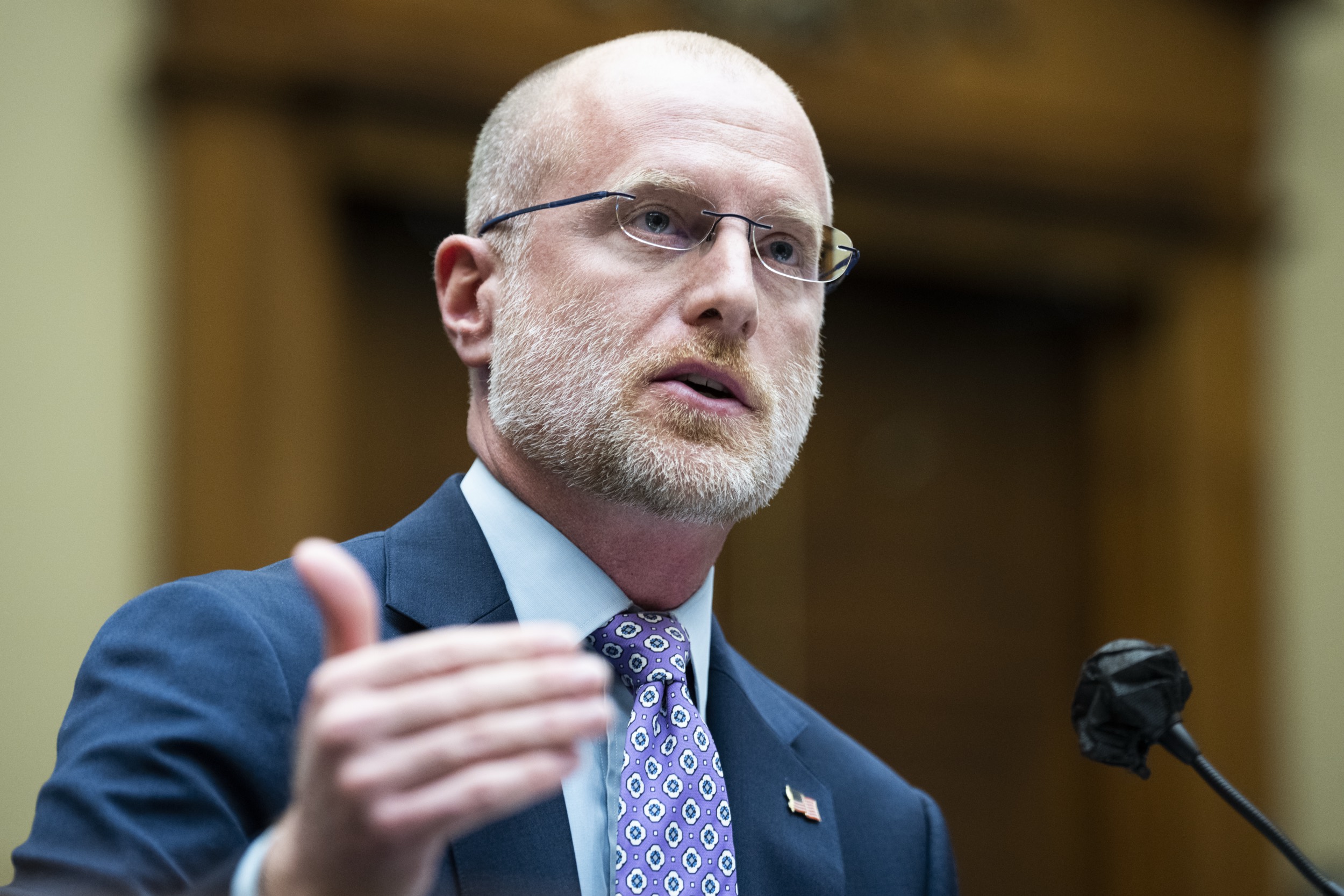
Federal Communications Commission Commissioner Brendan Carr speaks and gestures with his hand while testifying at a Congressional hearing
FCC Commissioner Brendan Carr testifies at a congressional hearing on March 31, 2022. Credit: Getty Images | Tom Williams
Story text

Federal Communications Commission Chairman Brendan Carr has threatened to revoke EchoStar licenses for radio frequency bands coveted by rival firms including SpaceX, which alleges that EchoStar is underutilizing the spectrum.

“I have directed agency staff to begin a review of EchoStar’s compliance with its federal obligations to provide 5G service throughout the United States per the terms of its federal spectrum licenses,” Carr wrote in a May 9 letter to EchoStar Chairman Charles Ergen. EchoStar and its affiliates “hold a large number of FCC spectrum licenses that cover a significant amount of spectrum,” the letter said.

Ergen defended his company’s wireless deployment but informed investors that EchoStar “cannot predict with any degree of certainty the outcome” of the FCC proceedings. The letter from Carr and Ergen’s statement is included in a Securities and Exchange Commission filing submitted by EchoStar today. EchoStar’s stock price was down about 8 percent in trading today.

EchoStar bought Dish Network in December 2023 and offers wireless service under the Boost Mobile brand. As The Wall Street Journal notes, the firm “has spent years wiring thousands of cellphone towers to help Boost become a wireless operator that could rival AT&T, Verizon and T-Mobile, but the project has been slow-going. Boost’s subscriber base has shrunk in the five years since Ergen bought the brand from Sprint.”

SpaceX did some measurements

Last month, Starlink operator SpaceX told the FCC that “new data confirms what most people already suspected—Dish Network barely uses the AWS-4 [2 GHz] band, if it is used at all, to provide 5G or any other service to American consumers.” SpaceX said one of its satellites “measured the power spectral density (PSD) levels in those bands and found that DISH’s use of the band is de minimis at best.”

SpaceX urged the FCC to reallocate the spectrum, saying “the 2 GHz band remains ripe for sharing among next-generation satellite systems that seek to finally make productive use of the spectrum for consumers and first responders.” EchoStar countered that SpaceX’s filing is “intended to cloak another land grab for even more free spectrum,” and that its “methodology is completely nonsensical, given that EchoStar’s terrestrial deployment is subject to population-based milestones that EchoStar has repeatedly demonstrated in status reports.”

“If SpaceX had done a basic search of public filings, it would know that EchoStar extensively utilizes the 2 GHz band and that the Commission itself has confirmed the coverage, utilization, and methodology for assessing the quality of EchoStar’s 5G network based on independent drive-tests,” EchoStar told the FCC. “EchoStar’s deployment already reaches over 80 percent of the United States population with over 23,000 5G sites deployed.”

There is also a pending petition filed by Vermont-based VTel Wireless, which asked the FCC to reconsider a 2024 decision to extend EchoStar construction deadlines for several spectrum bands. VTel was outbid by Dish in auctions for licenses to use AWS H Block and AWS-3 bands.

“In this case, teetering on the verge of bankruptcy, EchoStar found itself unable to meet the commitments previously made to the Commission in connection with its approval of T-Mobile’s merger with Sprint—an approval predicated on EchoStar constructing a fourth nationwide 5G broadband network by June 14, 2025,” VTel wrote in its October 2024 petition. “But with no notice to or input from the public, WTB [the FCC’s Wireless Telecommunications Bureau] apparently cut a deal with EchoStar to give it yet more time to complete that network and finally put its wireless licenses to use.”

FCC seeks public input

Carr’s letter said he asked FCC staff to investigate EchoStar’s compliance with construction deadlines and “to issue a public notice seeking comment on the scope and scale of MSS [mobile satellite service] utilization in the 2 GHz band that is currently licensed to EchoStar or its affiliates.” The AWS-4 band (2000-2020 MHz and 2180-2200 MHz) was originally designated for satellite service. The FCC decided to also allow terrestrial use of the frequencies in 2012 to expand mobile broadband access.

The FCC Space Bureau announced yesterday that it is seeking comment on EchoStar’s use of the 2GHz spectrum, and the Wireless Telecommunications Bureau is seeking comment on VTel’s petition for reconsideration.

“In 2019, EchoStar’s predecessor, Dish, agreed to meet specific buildout obligations in connection with a number of spectrum licenses across several different bands,” Carr wrote. “In particular, the FCC agreed to relax some of EchoStar’s then-existing buildout obligations in exchange for EchoStar’s commitment to put its licensed spectrum to work deploying a nationwide 5G broadband network. EchoStar promised—among other things—that its network would cover, by June 14, 2025, at least 70 percent of the population within each of its licensed geographic areas for its AWS-4 and 700 MHz licenses, and at least 75 percent of the population within each of its licensed geographic areas for its H Block and 600 MHz licenses.”

Carr said that under the 2019 agreement, “EchoStar’s failure to meet its new buildout requirements could result in the loss of its spectrum licenses and significant financial payments.” But EchoStar didn’t meet its obligations and “negotiated behind closed doors during the previous Administration in September 2024,” Carr wrote. “Under the terms of that bureau-level decision, EchoStar would no longer have to meet the June 2025 buildout obligations—meaning, its commitment to provide 5G to a broad swath of America. Nor would EchoStar have to face the agreed-upon consequences for failing to do so.”

FCC could let other firms use spectrum

EchoStar and its predecessor company missed deadlines or sought extensions four times between 2017 and 2024, Carr wrote. “That history is relevant today,” he wrote. “Currently before the FCC are filings from EchoStar that claim to satisfy the bureau’s new December 2024 buildout obligation. But questions remain regarding these submissions. Accordingly, I have asked FCC staff to investigate EchoStar’s compliance with its buildout milestones.”

Ergen’s response said that EchoStar has “invested tens of billions to deploy the world’s largest 5G Open RAN network—primarily using American vendors—across 24,000 5G sites, to offer broadband service to over 268 million people nationwide,” and has “met or exceeded all of the commitments we have entered into with the FCC to date.”

EchoStar will have to prove its case in the two FCC proceedings. The FCC set a May 27 deadline for the first round of comments in both proceedings and a June 6 deadline for reply comments. The proceedings could result in the FCC letting other companies use the spectrum and other remedies.

“In particular, we seek information on whether EchoStar is utilizing the 2 GHz band for MSS consistent with the terms of its authorizations and the Commission’s rules and policies governing the expectation of robust MSS,” the SpaceBureau’s call for comments said. “We also seek comment on steps the Commission might take to make more intensive use of the 2 GHz band, including but not limited to allowing new MSS entrants in the band.”

Photo of Jon Brodkin
Jon Brodkin Senior IT Reporter
Jon is a Senior IT Reporter for Ars Technica. He covers the telecom industry, Federal Communications Commission rulemakings, broadband consumer affairs, court cases, and government regulation of the tech industry.
85 Comments